 By Omer Yildiz

Ephesus is much more than the Library of Celsus. Here are 20 facts about the city, its ancient wonders and its Christian heritage, from the lost Temple of Artemis to the house where Mary is believed to have spent her last years.
The Ancient City and Its Wonders
- Since 2015, the ancient city of Ephesus has been listed as a UNESCO World Heritage Site.
- With a population of approximately 250,000, ancient Ephesus was the third-largest city in the Roman Empire.
- The Temple of Artemis at Ephesus, one of the Seven Wonders of the Ancient World, was destroyed in 356 BC by the arsonist Herostratus, whose act inspired the term “herostratic fame.”
- The Temple of Artemis at Ephesus was four times larger than the Parthenon in Athens.
- The Temple of Artemis at Ephesus was one of the first large temples built entirely of marble.
- The Grand Theater of Ephesus seated around 25,000 people, making it one of the largest theatrical structures in antiquity.
- Ephesus’ ancient theater has hosted big names: Sting played here in 1993, and Elton John’s concert on July 17, 2001 sold out all 25,000 seats.
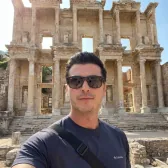
- The Library of Celsus in Ephesus once stored around 12,000 scrolls, ranking as the third-largest library in the ancient world after those of Alexandria and Pergamon.
- The ancient city featured communal public latrines with side-by-side seating and no separators, reflecting Roman social customs.
Ephesus and Early Christianity
- Ephesus is home to the Church of Ephesus, one of the Seven Churches of Revelation mentioned in the New Testament.
- The Riot of the Silversmiths, led by Demetrius against the Apostle Paul, took place in Ephesus, and this riot is included in the “Acts of the Apostles“.
- Ephesus served as the center of St. Paul’s ministry for nearly three years.
- Both Apostle Paul and St. John the Evangelist lived and preached in Ephesus, solidifying its importance in early Christianity.
- According to tradition, Apostle Paul wrote the Epistle to the Ephesians while he was imprisoned in Rome, around 60–62 AD.
- The Council of Ephesus convened in 431 AD in the Church of Mary, shaping critical Christian doctrines.
- The first church dedicated to the Virgin Mary is located within the ancient city of Ephesus.
- The Basilica of St. John in Ephesus was built by Emperor Justinian I, the same ruler who commissioned Hagia Sophia in Constantinople (today’s Istanbul).
- According to tradition, Mary, the mother of Jesus, spent her last years in the House of the Virgin Mary near Ephesus. Every year on August 15, the Feast of the Assumption is celebrated there with a special mass.
- The House of the Virgin Mary is revered by both Christians and Muslims. It has been an official pilgrimage site since 1892, and three popes have visited it: Paul VI, John Paul II, and Benedict XVI.
- According to tradition, the tomb of the Apostle John is located within the Basilica of St. John at Ephesus.
Private Ephesus tours
See These Places for Yourself
From the Library of Celsus and the Grand Theater to the House of the Virgin Mary, with a licensed local guide.
 RecommendedBest of Ephesus TourEphesus Ancient City, the Terrace Houses, the House of the Virgin Mary and the Temple of Artemis.See the tour
 Biblical Ephesus TourEphesus Ancient City and the Church of Mary, the House of the Virgin Mary, the Basilica of St. John and the Temple of Artemis.See the tour
Skip-the-line ticketsNo pre-paymentLicensed local guides