 By Omer Yildiz

Where is Ephesus? & Quick Overview
Ephesus lies on Turkey’s Aegean coast, right next to the town of Selcuk in Izmir Province, about 18 km from Kusadasi Port. In Roman times it was one of the biggest cities of the empire, home to the Temple of Artemis, one of the Seven Wonders, and later to St. Paul and St. John (see Christianity in Ephesus). Today you walk the same marble streets, from the Upper Gate down to the Library of Celsus and the Great Theatre. Below is what we tell our guests before they go: tickets, the walking route, the sites nearby and a short history.
Table of contents12 sections
- Where is Ephesus? & Quick Overview
- Practical Guide: Entrances, Tickets & Facilities
- Ephesus Walking Route: Step-by-Step Guide (Upper Gate to Lower Gate)
- Nearby Attractions
- History of Ephesus
- Cats of Ephesus
- Documentary Tour 4k: History of Ephesus Video
- Why Consider a Guided or Private Tour
- How far is Ephesus from Istanbul, Izmir, and Kusadasi?
- Visiting Ephesus at Night
- Video Guide: Best of Ephesus Tours from Kusadasi, Izmir, and Istanbul
- Frequently Asked Questions
Practical Guide: Entrances, Tickets & Facilities
08:00 – 20:00 (Box Office Closing Time: Upper Gate: 18:00 – Lower Gate: 19:00)
❄️ Winter (Oct 1 – Mar 31):
08:00 – 18:00 (Last entry is at 17:30)
Note: Only Turkish Lira or Credit Cards are accepted.
Free for children under 8. (Please bring passports for verification).
Official Website for Museum Pass ↗
Significant Tips from Your Local Guide
- Restrooms are available at both the Upper and Lower gates of Ephesus. The Upper Gate charges 0.50 Euro, while the Lower Gate restrooms are free. Once you enter the ancient city, there are NO restrooms for the next 1.5 – 2 hours. I see visitors struggling with this every single day. Alternatively, if your tour includes the House of the Virgin Mary (typically visited before Ephesus), you can use the free restrooms there.
- Once inside Ephesus, the nearest shop where you can purchase water is located in the center of the site near the Library of Celsus; however, prices there are quite high. I recommend bringing your own water or buying supplies at the markets near the Upper Gate before entering the site.
- Slippery Marble Warning: The ancient marble streets are worn smooth over centuries and are surprisingly slippery, even when dry. I frequently see visitors slipping, especially on the downhill slope of Curetes Street. To be honest, even I lose my footing there occasionally (haven’t fallen yet, fingers crossed!), so please take it slow and wear shoes with good grip.
- No Shade: Ephesus is an open-air museum with very few trees. In summer, the white marble reflects the sun, making it feel significantly hotter. A hat, sunscreen, and sunglasses are mandatory.
- Best Time to Beat the Crowds: Ephesus gets incredibly crowded, especially when cruise ships dock. Try to arrive right at 08:00 AM when gates open, or in the afternoon after 16:00 PM when large groups start to leave.
Which Gate Should You Start From? (Upper vs. Lower)
Start from the Upper Gate, Finish at the Lower Gate
Ephesus has two gates: the Upper Gate (also known as the Magnesia Gate) and the Lower Gate. Walking from the top down allows you to follow the natural flow of history, and more importantly, it is much easier on your knees.
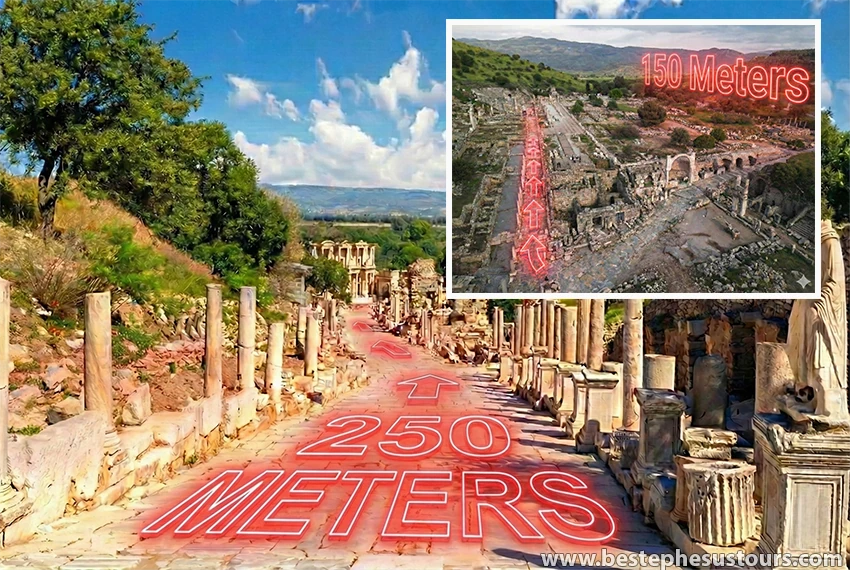
However, public transport and most parking lots are located at the lower gate, forcing independent travelers to hike uphill in the heat just to start their tour. The uphill walk is approximately 400 meters and takes place under temperatures of around 38°C.
This is exactly why experienced travelers prefer our Private Ephesus Tours. We pick you up from the Port of Kusadasi or your hotel, drop you right at the Upper Gate, and you enjoy a walk downhill while your guide brings the history of Ephesus to life. Our vehicle waits for you at the lower exit. No backtracking, no uphill hiking, just pure enjoyment of history.

Ephesus Walking Route: Step-by-Step Guide (Upper Gate to Lower Gate)
Here is the exact order of the ruins you will see when starting from the Magnesia Gate (Upper Gate) and walking down to Harbor Street (Lower Gate).
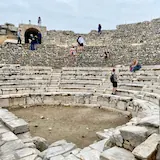
1. Upper City & The Odeon
Start your walk at the administrative heart. The Odeon. A smaller theatre used for meetings and performances, seating about 1,400 people.
📸 Tip: It is smaller and less crowded than the Great Theatre, making it a perfect spot for a group photo where the Odeon will fit into the frame, unlike the Great Theatre.
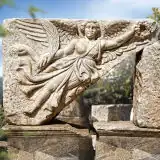
2. Domitian Square
Don’t miss the Goddess Nike relief sculpted in marble.
👟 Fun Fact: Look closely at the “swoosh” shape of her dress—it looks exactly like the Nike’s logo!
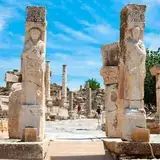
3. Curetes Street Entrance
Pass through the Gate of Heracles. Notice how narrow the pillars are? That was to stop ancient chariots from entering the administrative part.
📸 Tip: Take a photo while standing in the center of the Gate of Hercules, resting your hands on the columns on either side. Another great photo opportunity is to frame Curetes Street together with the Library of Celsus in the background.
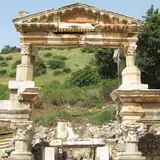
4. Trajan Fountain
The Fountain of Trajan is a monumental fountain built in honor of the Roman emperor Trajan. One of the finest restorations in the city. Right behind it lies the massive Scholastica Baths.
💡 Insider: Look at the walls of the bath to see the original clay pipes used for central heating!
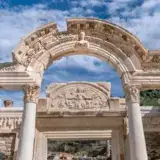
5. Temple of Hadrian & Toilets
Visit the Temple of Hadrian, dedicated to Emperor Hadrian, a famous Roman Emperor who visited Ephesus in 128 AD. Then, explore the Public Latrines located right next to it.
😂 Reality Check: Romans used to sit here side-by-side, socializing while doing their business!
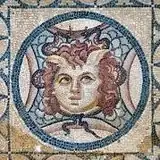
6. Terrace Houses
The “Beverly Hills” of Ephesus. These indoor villas feature incredible mosaics and frescos. These houses provide a fascinating insight into the daily lives of the wealthy residents of Ephesus.
☀️ Please Note: The Terrace Houses require an additional ticket, which costs 15 € per person (16 € from April 1, 2027). Because of the many steep stairs, it is not wheelchair accessible.
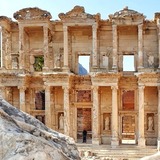
7. Library of Celsus
The third-largest library of the ancient world, and one of the most iconic structures in Ephesus, was originally built to serve as both a mausoleum and a library. The architects used an optical illusion (the columns at the sides are slightly shorter than those in the center) to make it look bigger than it actually is.
📸 Tip: The Library of Celsus is the best place in Ephesus for photography.
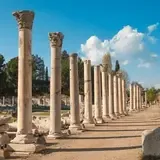
8. Commercial Agora
Pass through the Gate of Mazeus & Mithridates to enter the huge marketplace called the commercial agora. This is the heart of trade where St. Paul is believed to have worked making tents.
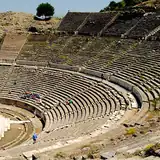
9. The Great Theatre
Seating 25,000 people, was used for both drama performances and gladiator fights during the Roman period. This is where the silversmith riot against St. Paul took place.
🔊 Try it (once the restoration is over): The inside of the theater is closed for now, but when it reopens, climb to the upper rows and you will find that conversations can still be heard clearly. If you clap your hands in the orchestra, you will experience the theater’s remarkable acoustics.
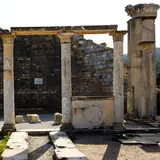
10. Church of Mary (Short Detour)
Near the Lower Gate, a short detour takes you to the Church of Mary. It is believed to be the first church dedicated to the Virgin Mary and hosted the famous Third Ecumenical Council in 431 AD.
Grand Finale: Ephesus Experience Museum
Located near Harbor Street, before the Lower Gate exit, the Ephesus Experience Museum offers a digital time-travel experience. Using 360-degree virtual reality technology, you can see and “feel” exactly how Ephesus looked 2,000 years ago.
🎥 How it works: Sessions last approximately 20 minutes and are available in 13 languages, including English, Spanish, Italian, Russian, Turkish, German, and Chinese. It is a great way to visualize the ruins you just walked through.
Nearby Attractions
These sites are located outside the walking route of the ancient city. Since they are spread apart (some on the mountain, some in the Selcuk town center), walking between them is not possible. I recommend a taxi or a private tour vehicle to visit them comfortably.
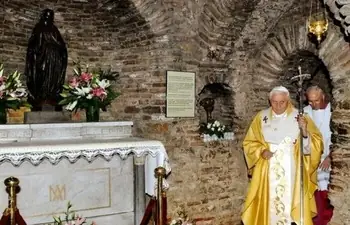
House of the Virgin Mary
This sacred pilgrimage site, situated on Bulbul Mountain near Ephesus, is believed to be the final resting place of the Virgin Mary, the mother of Jesus. Revered by both Christians and Muslims, it has been visited by three popes. The site features a chapel, the house itself, and a spring believed to have healing properties.
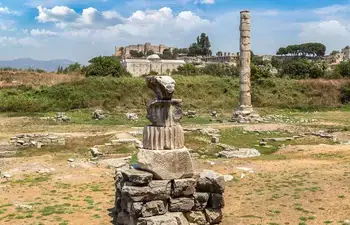
Temple of Artemis
Once one of the 7 Wonders of the Ancient World. Today, a single column remains standing. Not much is left, but it is a quick stop and you can still picture how huge the sanctuary once was.
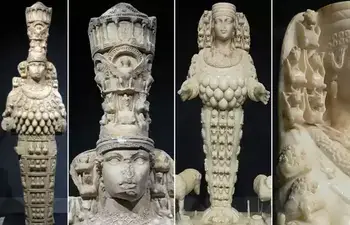
Ephesus Archaeological Museum
Located in Selcuk center. This is where the original statues (Artemis & Priapus) are kept. The Ephesus Archaeological Museum houses many of the artifacts found during excavations in Ephesus. It is the best place to see what came out of the ruins you just walked through.
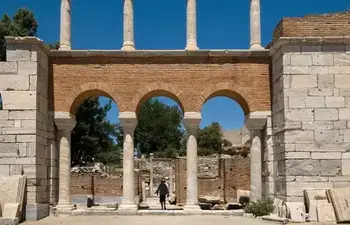
Basilica of St. John
Built over the burial site of St. John the Apostle. According to Christian tradition, Saint John the Evangelist wrote his gospel here. The ruins of this basilica are a short drive from Ephesus and offer panoramic views of the area, including the remains of the fortress on Ayasoluk Hill.
Below you will find the current entrance fees and opening and closing times for the nearby attractions mentioned above, including the House of the Virgin Mary, St. John’s Basilica, the Ephesus Archaeological Museum, and the Temple of Artemis.
👉 Complete Entrance Fees List (2026 & 2027)
👉 Current Opening & Closing Hours
👉 Complete Guide to House of the Virgin Mary
History of Ephesus
⏳ Ephesus Through the Ages (Quick Timeline)
💡 Interactive Guide: Click on any era to read its full story.
Prehistoric History of Ephesus

One of the highlights of our Ephesus Tours is, of course, Ephesus Ancient City. During the latest excavations by Ephesus archaeologists, mounds called Cukurici and Arvalya were discovered in the region, dating back to approximately 6000 BC. Then, for now, we can say that the history of Ephesus began in 6000 BC. Now, let’s set aside the prehistoric periods of Ephesus and continue the chronological history of Ephesus.
The Amazon Period and the Origin of the Name Ephesus

According to legend, if we ignore the prehistoric period of Ephesus, it was founded by a group of Amazons, famous for their exceptional skills as great female warriors, who also had a great ability to use bows and arrows. It is widely believed that Amazon women were priestesses of Hittite origin. So initially, the name of the city of Ephesus was Apasas. Apasas was the name of an Amazon Queen and means Queen Bee in the Hittite language. This may be the reason why many of the coins unearthed during the excavations in the ancient city of Ephesus have a relief of a queen bee on one side. As you can guess, the name of today’s Ephesus is derived from the first name of the city, Apasas.
Greek History of Ephesus and the Story of Androclus

Ephesus was founded for the second time around 1050 BC by Androclus, the son of the Athenian king Codrus. The city of Ephesus, founded by Androclus, also has a well-known mythological story. Androclus, who wants to explore the other side of the Aegean Sea and establish a new city, visits the oracle in Delphi before embarking on his journey. Androclus asks the oracle where he should place the city. The oracle tells Androclus to set the city where you sees the fish and the wild boar. After a long journey on the Aegean Sea, Androclus and his friends manage to reach the slopes of Ayasuluk Hill, which is within the borders of today’s Selcuk (Ephesus). One day, Androclus and his friends cooked and ate the fish over an open fire. However, this fire they burn causes a fire in the forest. Androclus sees the wild boar among the animals fleeing the fire and thinks the prophecy has come true. Thus, the location of the second Ephesus settlement is determined.

Persian Period of Ephesus and Alexander the Great
With the Greeks’ migration to Ephesus, which started with Androclus, the city became an Ionian city. The Ionians ruled in Ephesus for about 500 years. In 560 BC, Croesus, the king of Lydia, captured the city, but he only ruled for 16 years. Because the Persian invasion started in 546 BC. Persian domination in Ephesus continued until 334 BC. In 334 BC, the savior of the Ionians, the Macedonian king Alexander the Great, defeated the Persians in the battle of Granicus.
Reconstruction of Ephesus by Lysimachus
Ephesus, which had become an Ionian city again, was relocated to its current location by Lysimachus, one of Alexander the Great’s generals, around 295 BC. The reason the city was relocated to its current site was that the previous settlement area became swampy, and the port became unusable. Also, epidemic diseases such as malaria emerged.

Renewing the Ephesus Port
Lysimachus not only dredged a new seaport but also founded a completely new city. This city, nestled between Mt. Koressos and Mt. Pion, was fortified with a 9-kilometer wall for protection. To underline the significance of this new port, Lysimachus ordered the destruction of the neighboring port cities of Lebedos and Colophon, relocating their residents to the newly established city, which was named Arsinoeia in honor of his wife. Through Lysimachus’s ambitions, Ephesus was revitalized and once again rose to prominence as the leading trade hub in Asia Minor, marking a new era in the city’s history.
From the Temple of Artemis to the Fall of Ephesus
King Croesus of Lydia had already paid for the great Temple of Artemis in the 6th century BC. Under Rome, Ephesus became the leading city of the province of Asia, with around 250,000 people. In 88 BC the Ephesians sided with Mithridates of Pontus against Rome, then quickly changed sides again. St. Paul lived here for about three years in the 50s AD, and tradition says St. John spent his last years in Ephesus. In 431, the Third Ecumenical Council met in the Church of Mary, and a second council followed in 449. In the end it was the harbor that finished the city: it silted up, and by the 7th century most people had moved up to Ayasuluk Hill, the heart of today’s Selcuk.
We tell the whole story, period by period, in our Detailed History of Ephesus: Rise and Fall.
Cats of Ephesus
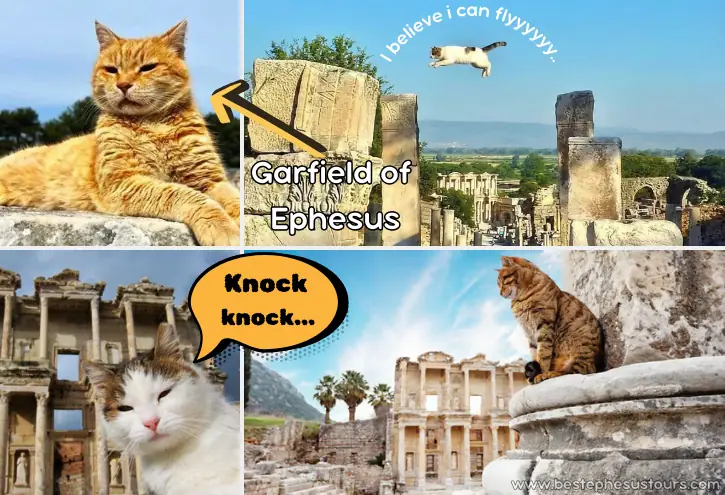
You might be surprised to see hundreds of cats wandering freely around the ruins. Don’t worry, they are the beloved “guardians” of the city! These cats are well-fed, friendly, and very used to people. The orange cat in the upper left corner is Garfield, who is so famous that he even has a popular Instagram profile called Garfield of Ephesus. The knock-knock cat is named Pisus. They love posing for photos on ancient columns—arguably the most popular attraction after the Library of Celsus!
Documentary Tour 4k: History of Ephesus Video
Why Consider a Guided or Private Tour

Self-Guided or Guided Tour?
Self-guided visits suit independent travelers who like to go at their own pace. With a guidebook or an audio guide, you can walk the route on your own, and it is the cheapest way to see Ephesus. What you miss are the stories behind the stones.
Self-guided: pros
- Budget-friendly
- Total control over pace and itinerary
- No time restrictions
Self-guided: cons
- Limited expert insights
- Potential for missing important details
A good guide fills that gap: who lived in the Terrace Houses, why the Gate of Heracles is so narrow, where the riot against St. Paul happened. If you are deciding between a group and a private tour, see our group vs private Ephesus tours comparison.
Honestly, walking around the ruins without a guide is just looking at a pile of old stones. You miss the real stories, the gossip of the ancient times, local customs, and the hidden details that aren’t written on the information boards.
If you are coming with a cruise ship, our Best of Ephesus Tours from Kusadasi is well-suited for cruise schedules, allowing you to skip the line and customize your itinerary. We pick you up right at the port, skip the long ticket lines (which can be wild in summer), and always get you back to your ship with a safe margin. No stress.
For any questions about Ephesus tours from Kusadasi, Izmir, or Istanbul, just contact us via the options below:
How far is Ephesus from Istanbul, Izmir, and Kusadasi?

- From Istanbul to Ephesus: The distance is about 600 kilometers (around 370 miles) by road. The journey by car takes around 6 to 7 hours, depending on traffic conditions and the specific route taken. Alternatively, one can fly from Istanbul to Izmir, which is much closer (a 1-hour flight from Istanbul to Izmir and a 50-minute drive from Izmir Airport to Ephesus by road).
- From Izmir to Ephesus: Ephesus is about 80 kilometers (about 50 miles) away from Izmir. The road trip usually takes around an hour, making it an easily accessible location from Izmir.
- From Kusadasi to Ephesus: The distance is much shorter, about 18 kilometers (about 11 miles). It takes around 25 minutes to drive from Kusadasi to Ephesus.
Visiting Ephesus at Night

During the night season, Ephesus also opens in the evening. The air is cooler, most of the crowds are gone and the Library of Celsus is lit up after dark. Night visits use only the Lower Gate and run on certain days, so check the details below first. To go with a guide, see our Ephesus Night Tours.
Things to Know Before You Go to Ephesus at Night
(Round trip route)
⏰ 19:00 – 22:00 (Last Entry)
(Museum Pass Invalid)
Illuminated until 22:00
Video Guide: Best of Ephesus Tours from Kusadasi, Izmir, and Istanbul
Frequently Asked Questions
From April 1 to September 30, the Ancient City of Ephesus is open to visitors every day between 08:00 and 20:00, including weekends (Box Office Closing Time: Upper Gate: 18:00 – Lower Gate: 19:00). From October 1 to March 31, it opens every day between 08:00 and 18:00 (Box Office Closing Time: 17:30).
No. There is no dress code for Ephesus. However, water, sunscreen, a hat, and comfortable shoes are strongly recommended.
Yes, Ephesus is undoubtedly worth visiting! It was one of the largest cities of the Roman Empire, with a population of 250,000, and one of the best-preserved ancient cities in the world.
Ephesus is in Turkey, just outside the town of Selcuk in Izmir Province. It is about 18 km (11 miles) from Kusadasi Port and about 80 km (50 miles) from Izmir.
The Apostle John lived and died in Ephesus, where Paul spent about three years converting many pagans to Christianity. Later, while imprisoned by the Romans, Paul wrote a significant letter to the Ephesian church.
A tour of Ephesus from the Upper Gate to the Lower Gate takes approximately 2 hours. If you also visit the Terrace Houses, the tour lasts around 2.5 hours. Including a visit to the Ephesus Experience Museum, which is included in the Ephesus entrance ticket, the total duration is approximately 3 hours.
Ephesus is partially wheelchair accessible, though some areas may be challenging. The route from the Upper Gate to the Lower Gate is downhill, which is helpful; however, sections of the marble surface can be uneven and somewhat bumpy. The Terrace Houses are not accessible, as they consist entirely of steep staircases. For wheelchair users, a strong companion or a hired assistant is strongly recommended.
Yes, and it is highly recommended to avoid long queues, especially in summer. You can purchase official e-tickets from the Turkish Ministry of Culture and Tourism’s website. If you book a private tour, your guide usually handles the tickets for you so you can skip the line.
To get to Ephesus from Izmir by public transport, you can take the IZBAN (Suburban Train) from Izmir to Tepekoy Station. At Tepekoy, you must transfer to the Selcuk train. Once you arrive at Selcuk Station, you will need to walk about 3.5 km (40 mins) or take a taxi to the Ephesus gates.
While cheap, this journey involves transfers and walking in the sun. For a hassle-free experience with direct pickup/drop-off, we recommend booking a Private Ephesus Tour from Izmir.
Ephesus can be visited all year round, as the region has a mild climate. The ideal time
is spring and fall, when the weather is mild and the crowds are thinner. Summers can be
quite hot, while winters may bring occasional rain. If you visit Ephesus in summer, don’t
forget to bring water, a hat and sunscreen, as this city of marble will make you feel hotter.
Yes, you’re welcome to take photographs at Ephesus. However, using a tripod is not allowed.
Private Ephesus tours
See Ephesus with a Local Guide
If you would like to explore Ephesus with Best Ephesus Tours, you can reach us at the links below.
 RecommendedBest of Ephesus TourAll the must-visit places in Ephesus and its surroundings.See the tour
 Biblical Ephesus TourEphesus Ancient City, the House of the Virgin Mary and St. John Basilica.See the tour
 Archaeological Ephesus TourEphesus Ancient City, the Terrace Houses, the Ephesus Museum and the Temple of Artemis.See the tour
Ephesus shore excursions
Skip-the-line ticketsNo pre-paymentLicensed local guidesQuestions? Contact us