Early Excavations by John Turtle Wood (1869)
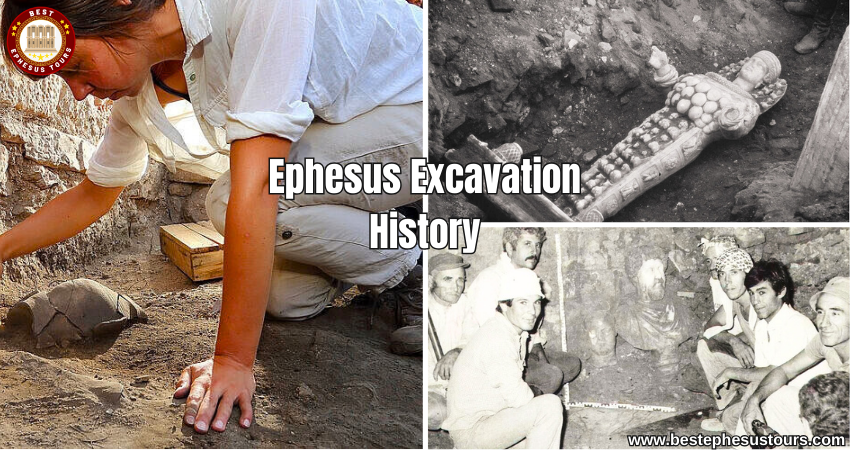
Ephesus Excavation History and The first archaeological excavations in Ephesus began in 1869 by a British engineer, John Turtle Wood, working for the British Museum. In 1863, Wood came to the Ephesus area and unsuccessfully searched for the Temple of Artemis. An inscription found in the Theatre in 1869 mentioned that the religious objects used in the plays were picked up from the temple, and following the sacred road, were brought into the city through the Magnesia Gate, and that these were taken back to the temple following the same route.
⛏️ Excavation Quick Facts
- 📅 First Dig: Started in 1863 by British engineer J.T. Wood.
- 🇦🇹 Main Team: The Austrian Archaeological Institute (ÖAI) has been leading the work since 1895.
- 🇹🇷 Local Role: The Ephesus Museum (Selcuk) manages restorations.
- ⏳ Status: Only 20% of the ancient city has been excavated so far!
Timeline of Discoveries (1863 – Present)
Ephesus is one of the world’s most extensively excavated ancient cities. Below is the complete timeline, including the latest discoveries from 2022 to 2026.

D.G. Hogarth’s Resumption of Excavations (Post-1904)
Therefore, Wood had to find the Magnesia Gate first. Since Magnesia was an ancient city southwest of Ephesus, the Magnesia Gate had to be in that direction. By following the fortification walls of the Hellenistic period, Wood easily discovered the gate. Starting here, he carried on preliminary digs, and by following the road, he found the location of the temple. Yet, for various reasons, he could not complete the excavation of the temple. After 1904, D.G. Hogarth resumed excavating the temple.

Austrian Archaeological Institute’s Involvement (Starting 1895)
The excavations, which are now being carried out by the Austrian Archaeological Institute, were started by Otto Benndorf in 1895. O. Benndorf obtained permission from the Ottoman sultan to excavate in Ephesus, and he later purchased a large section of the city. The land he had bought was nationalized in recent years by the Turkish authorities.
Key Discoveries and Restorations
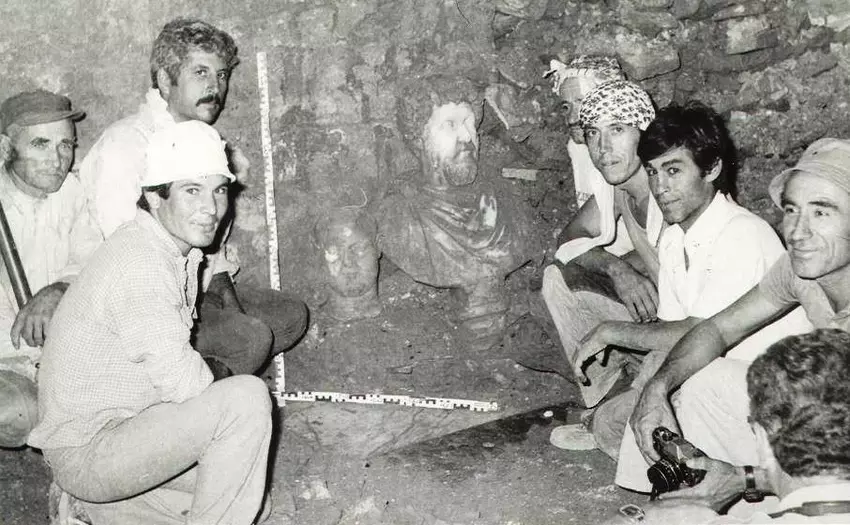
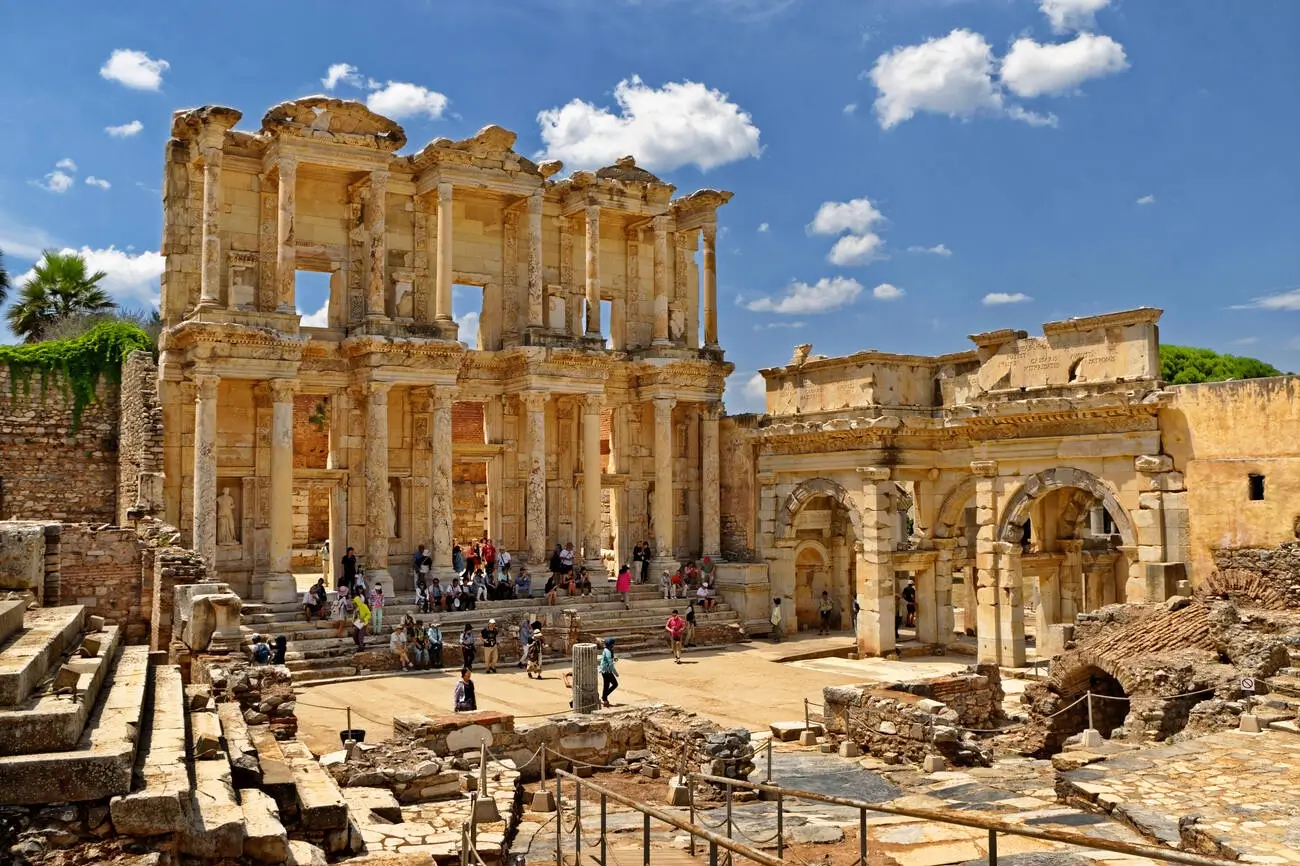
After Benndorf, under the supervision of (in chronological order) Profs. Keil, Miltner, Eichter, and since 1969 Prof. Vetters, the main streets, squares, and structures along the streets in Ephesus have been excavated. Prof. Vetters excavated a section of the insula with houses situated on the slopes and completed the restoration of two houses. The renovation of the Celsus Library was also realized in 1978 by Prof. Vetters. Most of the remains unearthed up to 1905 were taken to England, and most of those found between 1905 and 1923 were taken to Austria.

Ephesus Museum’s Role (Starting 1954)
In 1954, the Ephesus Museum started excavating and restoring Ephesus, and since then, many important structures have been excavated and restored. The Ministry of Culture and Tourism of the Turkish Republic, in 1979, started the “Environmental Protection, Excavation and Restoration of Selcuk-Ephesus” project, with emphasis on the excavation of the Church of St. John, Stadium Street, and the Church of the Virgin Mary.
New Discovery: The “Time Capsule” (2022-2026)
In recent campaigns led by Sabine Ladstätter, archaeologists made sensational discoveries at Domitian Square. They uncovered a Late Antique neighborhood (dating to 614-615 AD) that was suddenly destroyed.
🔥 Evidence of War: A Sudden Destruction
It wasn’t an earthquake, but likely a violent Sassanid (Persian) invasion in 614-615 AD. Archaeologists found arrowheads and spearheads in the area. The destruction was so sudden that a thick burnt layer sealed everything inside, preserving daily life exactly as it was—creating a unique “Pompeii effect” in Ephesus.
(This layer sealed the shops like a lid)
(Preserved untouched for 1400 years)
What exactly was found in these 1400-year-old shops?
- 🏺 700 Pilgrim Bottles: In a souvenir shop, over 700 clay bottles (ampoules) bearing Christian symbols were found stored in crates, ready to be sold to pilgrims arriving at the city.
- 🐟 The “Bistro” Menu: A local “Taberna” (ancient bistro) revealed thousands of ceramic vessels. Inside bowls, archaeologists found the remains of a last meal: salted mackerel, mussels, oysters, and dessert remains like peach, almond, and olive seeds.
- 💰 The Forgotten Safe: In the corner of a shop, a copper money box was discovered containing four gold coins (solidi) and over 700 copper coins. The owner fled before they could grab the day’s earnings.
- 🪔 The Lamp Shop: Another shop was identified as a specialized store selling oil lamps, with hundreds of unused lamps waiting on the shelves.

🎥 Video Tour: The 2024 Ephesus Excavation Site
A look at the Domitian Square working area where the 7th-century shops were discovered.
ℹ️ Visitor Tip: How to See the Excavations?
You cannot enter the active digging pits, but you MUST visit the Terrace Houses to see the results. It is a “Museum within a Museum” where you walk on glass floors over excavated Roman villas. Often, you can see restorers working on frescoes in real-time.
Frequently Asked Questions
The first systematic excavations were started in 1863 by the British railway engineer John Turtle Wood. He spent six years digging in the mud specifically to find the lost Temple of Artemis, one of the Seven Wonders of the Ancient World. After his discovery in 1869, excavations were later taken over by the Austrian Archaeological Institute in 1895.
Despite over 160 years of work, archaeologists estimate that only 15% to 20% of the ancient city has been unearthed.
Yes, excavations continue annually. They are currently led by the Austrian Archaeological Institute (ÖAI) in collaboration with the Turkish Ministry of Culture and Tourism. The most recent focus has been on Domitian Square (2022-2026), where a “Time Capsule” neighborhood from the 7th century was discovered.
The latest major discovery (announced in 2022 and expanded through 2024-2026) is a Late Antique residential and business district at Domitian Square. Archaeologists found shops, workshops, and a local tavern that were suddenly destroyed by fire in 614/615 AD. The debris preserved gold coins, 700 pilgrim bottles, and even the remains of a mackerel dinner, perfectly sealed under ash.
The artifacts are distributed among three major museums due to the excavation history:
Ephesus Archaeological Museum (Selcuk, Turkey): Houses the famous Artemis statues, the Priapus statue, and recent finds.
Ephesus Museum (Vienna, Austria): Displays discoveries from the Austrian excavations (1895-1906), including the Parthian Monument.
British Museum (London, UK): Holds the earliest finds from J.T. Wood’s excavations, primarily from the Temple of Artemis.
For safety and scientific preservation, visitors cannot enter the active digging pits (like the new Domitian Square trenches). However, you can visit the Terrace Houses, which is an active restoration site. Walking on glass floors, you can observe the ongoing preservation of Roman frescoes and mosaics.
You May Also Like
If you would like to explore Ephesus Excavations on-site with us, you can reach us at the links below. Best Price, %100 Satisfaction Guaranteed!