 By Omer Yildiz
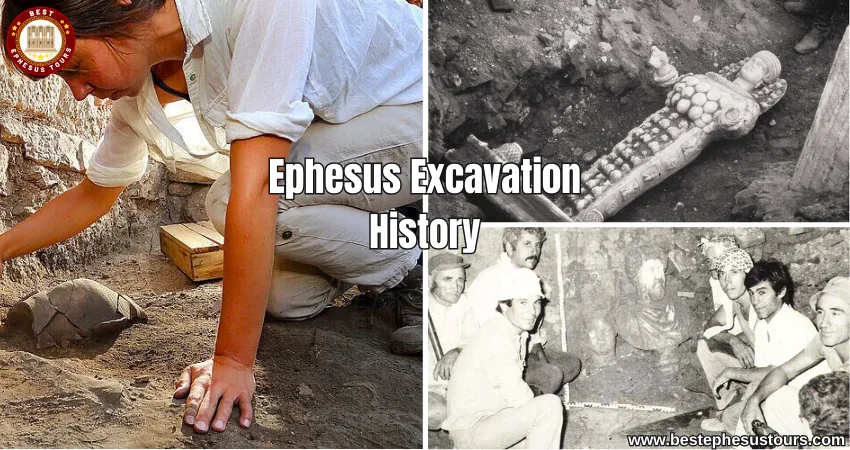
Archaeologists have been digging at Ephesus since 1863: first the British, then the Austrian Archaeological Institute from 1895 and the Ephesus Museum from 1954. Below you can follow who found what, from the Temple of Artemis to the shops at Domitian Square, and what is being uncovered right now.
Early Excavations by John Turtle Wood (1863)
The first archaeological excavations in Ephesus began in 1863 by a British engineer, John Turtle Wood, working for the British Museum. At first, he searched for the Temple of Artemis without success. An inscription found in the Theatre in 1869 mentioned that the religious objects used in the plays were picked up from the temple, and following the sacred road, were brought into the city through the Magnesia Gate, and that these were taken back to the temple following the same route.
Therefore, Wood had to find the Magnesia Gate first. Since Magnesia was an ancient city southwest of Ephesus, the Magnesia Gate had to be in that direction. By following the fortification walls of the Hellenistic period, Wood easily discovered the gate. Starting here, he carried on preliminary digs, and by following the road, he found the location of the temple. Yet, for various reasons, he could not complete the excavation of the temple.
⛏️ Excavation Quick Facts
- 📅 First Dig: Started in 1863 by British engineer J.T. Wood.
- 🇦🇹 Main Team: The Austrian Archaeological Institute (ÖAI) has been leading the work since 1895.
- 🇹🇷 Local Role: The Ephesus Museum (Selcuk) manages restorations.
- ⏳ Status: Only 20% of the ancient city has been excavated so far!
Timeline of Discoveries (1863 – Present)
Ephesus is one of the world’s most extensively excavated ancient cities. Below is the complete timeline, including the latest discoveries from 2022 to 2026.

D.G. Hogarth’s Resumption of Excavations (Post-1904)
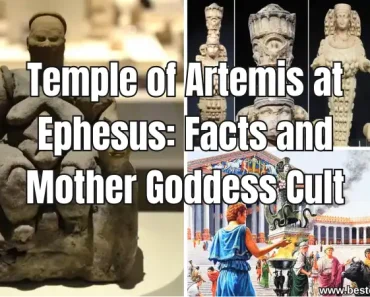
After 1904, D.G. Hogarth resumed excavating the temple. In its foundations he found the famous “Golden Treasure” and ivory statuettes.
Austrian Archaeological Institute’s Involvement (Starting 1895)
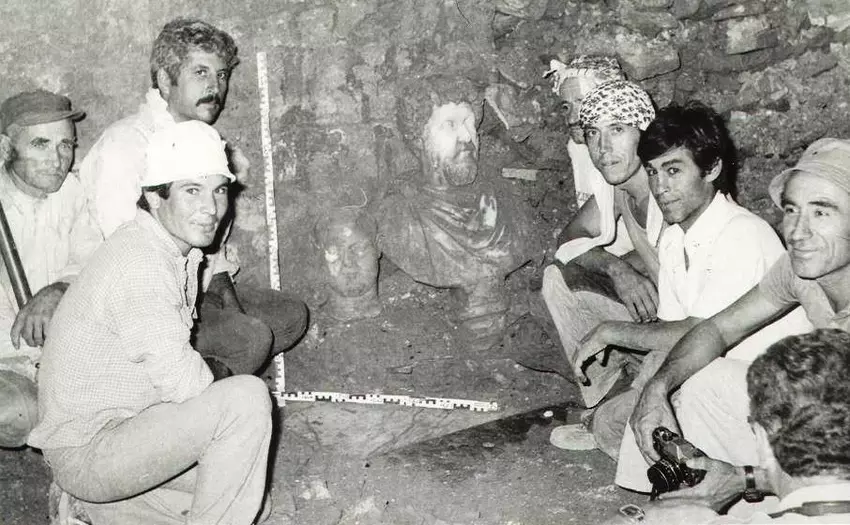
The excavations, which are now being carried out by the Austrian Archaeological Institute, were started by Otto Benndorf in 1895. O. Benndorf obtained permission from the Ottoman sultan to excavate in Ephesus, and he later purchased a large section of the city. The land he had bought was nationalized in recent years by the Turkish authorities.
Key Discoveries and Restorations
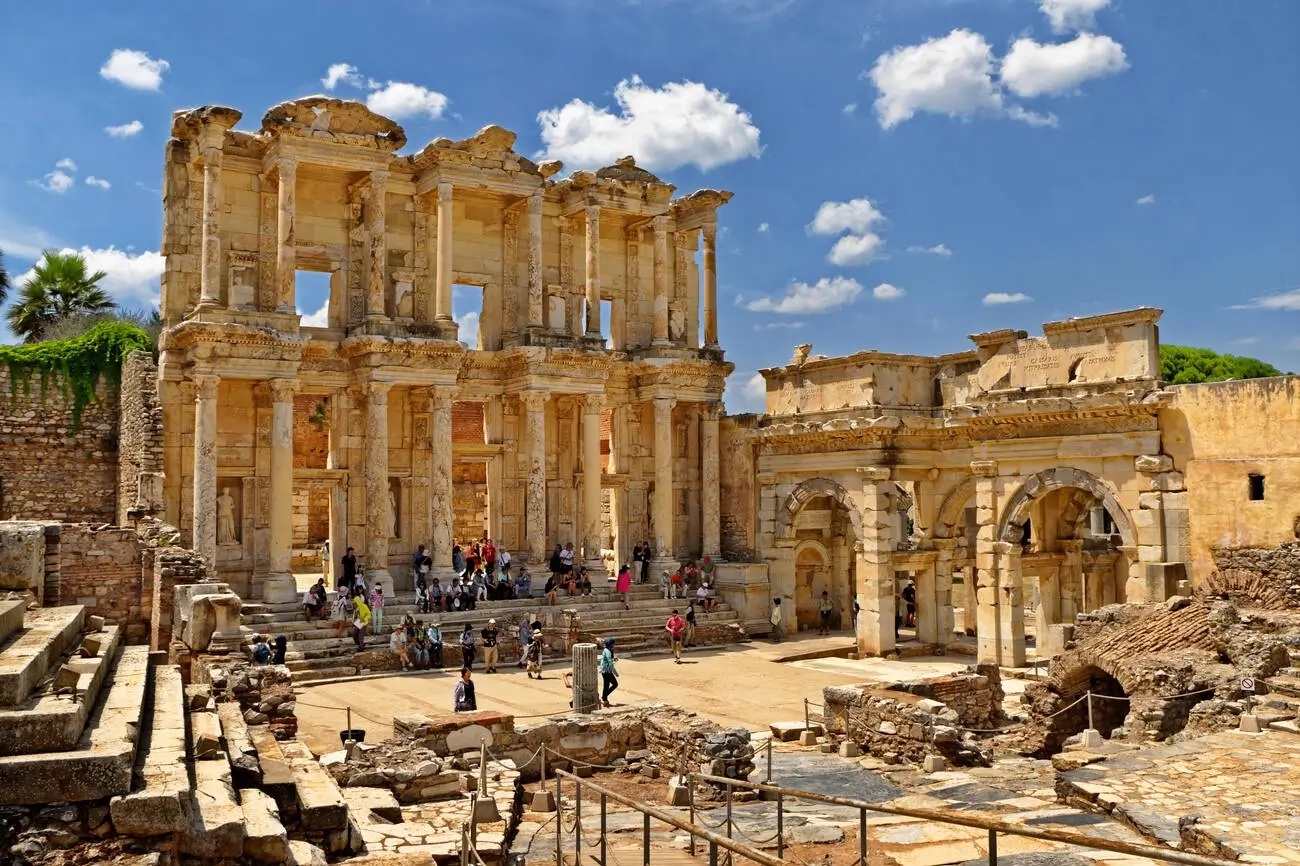
After Benndorf, under the supervision of (in chronological order) Profs. Keil, Miltner, Eichler, and since 1969 Prof. Vetters, the main streets, squares, and structures along the streets in Ephesus have been excavated. Prof. Vetters excavated a section of the insula with houses situated on the slopes and completed the restoration of two houses. The renovation of the Celsus Library was also realized in 1978 by Prof. Vetters. Most of the remains unearthed up to 1905 were taken to England, and most of those found between 1905 and 1923 were taken to Austria.


Ephesus Museum’s Role (Starting 1954)
In 1954, the Ephesus Museum started excavating and restoring Ephesus, and since then, many important structures have been excavated and restored. The Ministry of Culture and Tourism of the Turkish Republic, in 1979, started the “Environmental Protection, Excavation and Restoration of Selcuk-Ephesus” project, with emphasis on the excavation of the Church of St. John, Stadium Street, and the Church of the Virgin Mary.
New Discovery: The “Time Capsule” (2022)
In the 2022 campaign led by Sabine Ladstätter, archaeologists made sensational discoveries at Domitian Square. They uncovered a Late Antique neighborhood (dating to 614-615 AD) that was suddenly destroyed.
🔥 Evidence of War: A Sudden Destruction
It wasn’t an earthquake, but likely a violent Sassanid (Persian) invasion in 614-615 AD. Archaeologists found arrowheads and spearheads in the area. The destruction was so sudden that a thick burnt layer sealed everything inside, preserving daily life exactly as it was—creating a unique “Pompeii effect” in Ephesus.
(This layer sealed the shops like a lid)
(Preserved untouched for 1400 years)
What exactly was found in these 1400-year-old shops?
- 🏺 Around 600 Pilgrim Bottles: In a souvenir shop, around 600 clay bottles (ampoules) bearing Christian symbols were found stored in crates, ready to be sold to pilgrims arriving at the city.
- 🐟 The “Bistro” Menu: A local “Taberna” (ancient bistro) revealed thousands of ceramic vessels. Inside bowls, archaeologists found the remains of a last meal: cockles or oysters, next to amphorae full of salted mackerel, and dessert remains like peach, almond, and olive seeds.
- 💰 The Forgotten Safe: In the corner of a shop, a copper money box was discovered containing four gold coins (solidi) and over 700 copper coins. The owner fled before they could grab the day’s earnings.
- 🪔 The Lamp Shop: Another shop was identified as a specialized store selling oil lamps, with hundreds of unused lamps waiting on the shelves.

What’s Happening at Ephesus Now (2024–2026)
Since June 2024, the Austrian team has been led by Martin Steskal, who took over from Sabine Ladstätter after her 14 years as excavation director. She passed away the same month. Next to the Austrian work, the Turkish Ministry of Culture and Tourism runs a large excavation and restoration program started in 2023, called “Heritage for the Future: Endless Ephesus”.
- 2024City edge
The Koressos Gate
Steskal’s team uncovered the massive foundations of the Koressos Gate. Ephesus had three main gates, and this is the third one found, after the Magnesia Gate and the Harbour Gate.
- 2025Stadium Street
A Roman Bathtub and a Statue Under Foot
A marble bathtub, cut from the local “Greco Scritto” marble and probably from one of the Terrace Houses, was found reused as a fountain trough. Close by, a male statue had been laid face-down and used as a paving stone during a later street repair.
- 2025Harbour Baths
An Incense Burner for Serapis
A terracotta incense burner with a relief of the Egyptian god Serapis, one more sign of how popular his cult was in Roman Ephesus.
- 2026Stadium Street
The “Stone Hospital” and a New Route
Next to Stadium Street, the team set up what they call a “stone hospital”. Broken columns, bases, capitals and inscribed blocks are documented, cleaned, strengthened and put back in place. By May 2026, about 60% of the nearly 130 columns and bases on the street had been restored. The goal is to finish Stadium Street and Harbour Street by the end of 2026 and open a new route:
Stadium Street→Great Theatre→Harbour Street→Harbour Baths - 2026Artemision
A Second Look at an Unusual Grave
A study published in July 2026 re-examined a grave found earlier in the Roman Odeion near the Temple of Artemis: two newborns, possibly twins, carefully buried in a disused latrine channel in the 8th or 9th century AD.
🎥 Video Tour: The 2024 Ephesus Excavation Site
A look at the Domitian Square working area where the 7th-century shops were discovered.
ℹ️ Visitor Tip: How to See the Excavations?
You cannot enter the active digging pits. If you want to see excavation work up close, visit the Terrace Houses (separate ticket). It is a “Museum within a Museum” where you walk on glass floors over excavated Roman villas. Often, you can see restorers working on frescoes in real-time.
Frequently Asked Questions
The first systematic excavations were started in 1863 by the British railway engineer John Turtle Wood. He spent six years digging in the mud specifically to find the lost Temple of Artemis, one of the Seven Wonders of the Ancient World. After his discovery in 1869, excavations were later taken over by the Austrian Archaeological Institute in 1895.
Despite over 160 years of work, archaeologists estimate that only 15% to 20% of the ancient city has been unearthed.
Yes. The Austrian Archaeological Institute (ÖAI) still excavates every year with a permit from the Turkish Ministry of Culture and Tourism, led since 2024 by Martin Steskal. In 2026, much of the work is restoration under the Ministry’s Endless Ephesus project, mainly on Stadium Street, the Great Theatre and Harbour Street, to open a new visitor route.
The biggest recent find is the Late Antique business district at Domitian Square, excavated in 2022. Shops, workshops and a tavern were suddenly destroyed by fire in 614/615 AD, sealing gold coins, around 600 pilgrim bottles and amphorae of salted mackerel under ash. Newer finds include the Koressos Gate (2024), a Roman marble bathtub and a reused statue on Stadium Street, and a Serapis incense burner from the Harbour Baths (2025).
The artifacts are distributed among three major museums due to the excavation history:
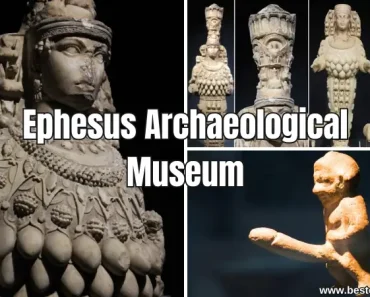
Ephesus Archaeological Museum (Selcuk, Turkey): Houses the famous Artemis statues, the Priapus statue, and recent finds.
Ephesus Museum (Vienna, Austria): Displays discoveries from the Austrian excavations (1895-1906), including the Parthian Monument.
British Museum (London, UK): Holds the earliest finds from J.T. Wood’s excavations, primarily from the Temple of Artemis.
For safety and scientific preservation, visitors cannot enter the active digging pits (like the new Domitian Square trenches). However, you can visit the Terrace Houses, which is an active restoration site. Walking on glass floors, you can observe the ongoing preservation of Roman frescoes and mosaics.
Private Ephesus tours
See What the Archaeologists Found
From Domitian Square to the Library of Celsus and the Ephesus Museum, with a licensed local guide.
 RecommendedBest of Ephesus TourEphesus Ancient City, the Terrace Houses, the House of the Virgin Mary and the Temple of Artemis.See the tour
 Archaeological Ephesus TourEphesus Ancient City, the Terrace Houses, the Ephesus Museum and the Temple of Artemis.See the tour
Skip-the-line ticketsNo pre-paymentLicensed local guides